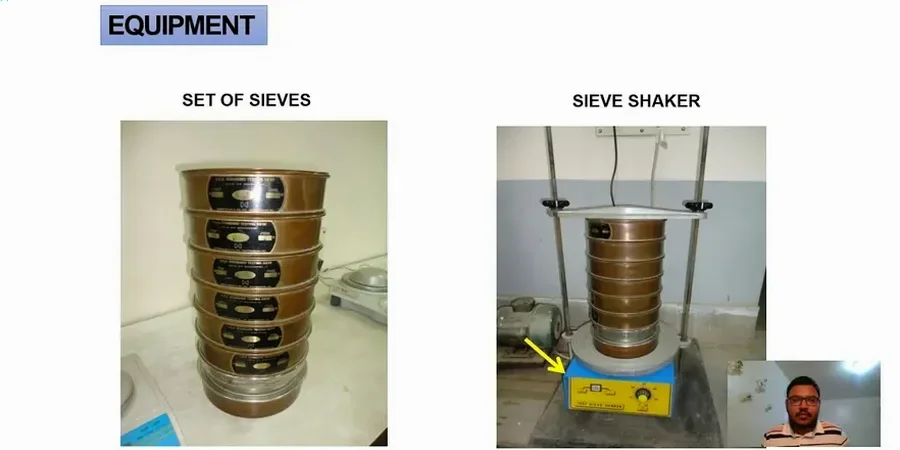
The single biggest mistake we see on London sites is contractors ordering concrete based on a guess. The soil fines content dictates everything from drainage design to frost heave susceptibility. A proper grain size analysis, combining mechanical sieving with a hydrometer for the silt and clay fraction, eliminates that guesswork. In our expertise, skipping this test on the glaciolacustrine soils common near Westminster Ponds or the Thames River floodplain leads to change orders that cost far more than the lab fee. We run the full curve per ASTM D422, because a hydrometer reading at 24 hours tells you more about long-term settlement than any borehole log can without it. For deeper exploration, we often coordinate with SPT drilling to get samples that truly represent the layered stratigraphy beneath London.
In London's glacial silts, the difference between a well-graded and a gap-graded soil is often a single hydrometer reading at 2 microns.
Our approach and scope
Site-specific factors
We reviewed a project off Wharncliffe Road where the geotechnical report classified the soil as 'silty sand' based on visual inspection alone. The contractor placed a pad footing, and six months later, differential settlement cracked the foundation wall. Lab results from our grain size analysis showed 42% clay content by hydrometer, not the assumed 10%. That soil was a fat clay, not a sand. The hydrometer caught it. In London's older neighborhoods, like Old South or Woodfield, you're often building on disturbed fill with pockets of natural clay. Without the full gradation curve, you risk designing for soil that doesn't exist. The National Building Code of Canada references particle size distribution for seismic site classification and frost protection. A sieve-only report leaves half the story untold, and that half is usually the problem.
Reference standards
ASTM D422: Standard Test Method for Particle-Size Analysis of Soils, ASTM D6913: Standard Test Methods for Particle-Size Distribution (Gradation) of Soils Using Sieve Analysis, ASTM D7928: Standard Test Method for Particle-Size Distribution (Gradation) of Fine-Grained Soils Using the Sedimentation (Hydrometer) Analysis, NBCC 2020: National Building Code of Canada (seismic site classification and frost protection), CSA A23.3: Design of Concrete Structures (aggregate gradation requirements)
Other technical services
Atterberg Limits
We run the liquid and plastic limit tests on the fines fraction from your grain size analysis to classify the soil under the Unified Soil Classification System. Essential for cohesive soils in London's Thames River valley.
Hydrometer Sedimentation Analysis
Standalone hydrometer testing for silt and clay fractions when the coarse fraction is minimal. We use a 152H hydrometer with temperature correction and dispersing agent blank.
Sand Cone Density Test
Field compaction control to verify that the fill on your London site meets the specified relative density. We correlate the density with the grain size curve to confirm material compliance.
Triaxial Shear Testing
Consolidated undrained or drained triaxial tests on reconstituted samples at target gradations. This tells you how the particle size distribution affects shear strength and pore pressure response.
Typical parameters
Quick answers
What does a grain size analysis with hydrometer cost in London, Ontario?
For a combined sieve and hydrometer analysis on a single soil sample, the lab fee typically ranges from CA$150 to CA$280 depending on the percentage of fines and whether we need to run a double hydrometer for quality control.
Why does London soil need a hydrometer test instead of just a sieve analysis?
London's glacial geology deposited thick sequences of silt and clay. A sieve analysis stops at 0.075 mm, so it can't distinguish silt from clay. The hydrometer measures particles down to about 0.001 mm. That clay fraction controls frost susceptibility, settlement rate, and the soil's classification under the Unified Soil Classification System.
How long does the full grain size test take from sample drop-off to report?
We quote three to five business days for a standard grain size analysis. The hydrometer portion requires readings at specific time intervals over a minimum of 24 hours. Soils with high clay content may need extended sedimentation time to capture the fine tail of the curve. We'll let you know at drop-off if your sample will need extra time.
Can you do a grain size analysis on a small sample from a test pit or SPT split spoon?
Yes, we routinely run grain size analysis on samples from test pits and SPT split spoons across London and southwestern Ontario. For hydrometer testing, we need at least 200 grams of the minus No. 10 fraction. If your sample is limited, we'll coordinate with your driller to prioritize the intervals that matter most for your foundation design.